
If you're paying someone every month to help with SEO and marketing, it's reasonable to ask what you're getting for that investment. A report with charts can be useful. You should also be able to see the work behind those charts and understand what it's meant to improve.
That doesn't mean every month will bring a jump in calls or sales. It does mean you should know what your provider worked on, what they learned and what they're recommending next.
Here's what I'd look for before starting a monthly agreement, or when reviewing one you already have.
Know what you're paying someone to do
“Monthly marketing” can mean very different things. One arrangement might give you advice and a regular review of your website. Another might include writing, website changes or managing advertising.
Ask for the work to be described in everyday terms. If SEO is included, which pages or problems will receive attention? If content is included, does that mean topic ideas, a written draft or a finished article published on your site?
Advice can be valuable when someone on your team can carry it out. If you're expecting the provider to make the changes, that needs to be part of the agreement too.
Clarify separate expenses, such as advertising spend, software or photography. If there's a monthly time allowance, ask whether calls, reporting and checking the work use that same time.
Start with the business problem
What do you want the work to help with? Maybe you want more estimate requests for a particular service. Or customers keep calling with a question your website should already answer. That gives you and the provider something specific to work on together.
The provider should be able to explain how the recommended work helps with that. Rewriting a service page may make sense if people can't tell what you do. Correcting your business information may be more urgent if customers are finding the wrong details.
Ask why that work deserves attention now. You should get an explanation you can follow, including what can reasonably be completed and what information the provider needs from you.
The plan should also make room for something unexpected. A broken contact form may need attention before the next planned article. If the work changes, you should hear what changed and how it affects the rest of the month.
See what was finished and what's still waiting
A work summary should point you to something you can review: a page that changed, an article that's ready or a problem that was fixed. “Website optimization” leaves too much for you to guess.
If a page change was recommended, has anyone made it yet? If an article was written, is it still waiting for review or can customers read it? You shouldn't have to guess from the update.
Here's a fictional example for an electrical contractor that wants more inquiries about panel upgrades:
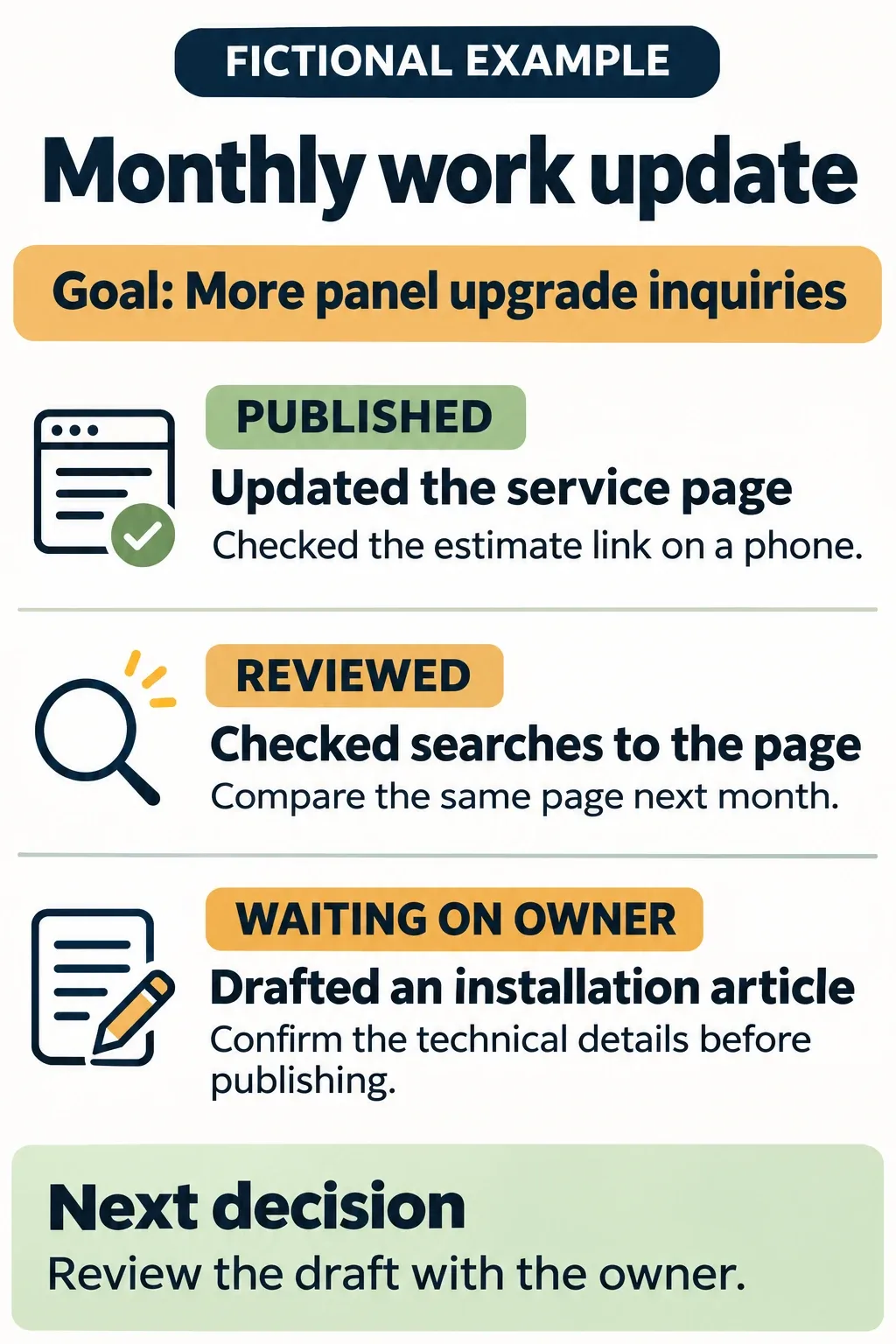
- Published. We rewrote the panel upgrade page to explain the service and how to request an estimate. We checked the estimate link on a phone.
- Reviewed. We looked at the Google searches that brought people to the page. Next month we'll compare the same page across equal reporting periods.
- Waiting on the owner. We drafted an article answering a common installation question. The owner needs to confirm the technical details before it can go live.
In that example, the owner knows the service page is live and the article is waiting for their input. They can confirm the installation details so the article can move forward. Whether the new page brings in more work is a separate question, and the report needs evidence before making that claim.
Have the numbers explained in business terms
You shouldn't need to learn a new reporting system just to understand the monthly conversation. Ask which numbers matter for the work you've agreed to do and what they can tell you.
For SEO, Google Search Console reports information such as how often your pages appeared in Google Search and how often people clicked through. Those measures help you understand search activity. They don't tell you whether someone became a suitable customer.
Look at inquiries separately. Did people contact you about the services you want to provide? Were those requests a good fit? Did they lead to estimates, appointments or sales? If that information isn't being recorded, the report should say so.
What the numbers might sound like in a real conversation
In this fictional example, the panel upgrade page received 40 clicks from Google over the last 28 days, up from 30 in the previous 28 days. The office logged three panel upgrade inquiries in each period. The inquiry log doesn't say where every caller found the business, so we can't tell which inquiries came from Google or whether the page update influenced them.
Next month, I'd have the office ask callers how they found the business and record the answer when they know it. Then I'd compare the same page and service again. That gives us something better to go on when we decide where to spend time next.
Keep different marketing efforts separate as well. A paid ad, an email and an unpaid Google result can all bring someone to your site. A total for the whole website won't explain which of those brought the visits you're discussing.
Ask to compare consistent periods and consider what's happening in the business. Seasonal demand, a new campaign or a change in the work you're promoting can affect the picture. When there are only a few inquiries, one good or bad week isn't enough to judge the whole arrangement.
If people are visiting but inquiries aren't reaching you, check where those inquiries are going before assuming you need more traffic.
Expect a straight answer when progress is slow
SEO changes can take time to show an effect, and a provider can't promise you a particular place in Google's results. Google's guidance on hiring an SEO recommends asking about expected results, timing and how the provider will explain their changes.
Some useful work also keeps a problem from getting worse or helps you avoid an unnecessary expense. That work still deserves an explanation.
If results are flat or down, ask what the provider has checked, what they still don't know and what they recommend doing next. You should also agree on when you'll review that decision. “SEO takes time” may be true, but it shouldn't be the whole conversation month after month.
Bring these questions to your next review
You can use these questions with your current provider or when discussing a new agreement:
- What are we trying to improve for the business?
- What did you finish, and where can I see it?
- What is waiting on me or someone else?
- What do the numbers tell us, and what can't they tell us yet?
- What do you recommend working on next, and why?
- Is that work included, or does it need a separate quote?
Keep the answers with the next month's update. You'll be able to see whether the agreed work happened and follow up on anything that's still waiting.
How we approach monthly work at Vantage
Our service packages offer different levels of advice and hands-on help. Some focus on reviews and recommendations. Selected packages also include agreed website or SEO improvements. Content production and larger projects are agreed separately.
Before you commit, we confirm the work, timing and responsibilities in your proposal. The arrangement should fit the help you need and the time available to do it properly.
If you're considering ongoing support, you can tell us what you need help with during a Free Consultation. We'll talk about your business and whether Vantage is a good fit. A detailed assessment or implementation is separate from that conversation.
Photo by Vitaly Gariev · Unsplash. Stock photograph used for illustration.